ECG Test: What Does It Tell Us About Your Heart?

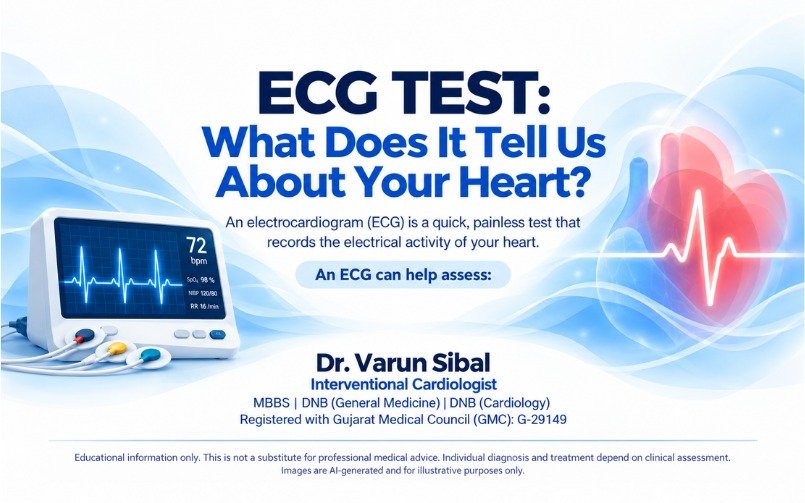
Quick Answer: What Can an ECG Tell You?
An Electrocardiogram (ECG or EKG) serves as a simple, non-invasive test. It actively records the electrical activity of your heart. Specifically, this test helps doctors assess your heart rate, rhythm, and electrical pathways. Furthermore, an ECG frequently reveals patterns associated with a heart attack or abnormal rhythms. The machine records this data quickly without sending electricity into your body. However, the test only provides a brief snapshot of your cardiac function. Therefore, doctors always interpret a normal result alongside your physical symptoms and medical history rather than relying on the graph alone.
Introduction: Understanding Your Heart’s Electrical Activity
Your heart continuously generates electrical signals. These signals coordinate each heartbeat perfectly. Consequently, they help different parts of the heart contract in the correct sequence, pushing blood throughout your body.
When these electrical signals change, they often indicate an abnormal heart rhythm or another cardiac problem. In such situations, cardiologists recommend an ECG test to understand the exact issue. Patients experiencing chest discomfort, palpitations, dizziness, or unexplained breathlessness frequently undergo this evaluation. Moreover, doctors use the test to monitor existing conditions and check medication effects.
Naturally, many patients wonder what the lines on the report actually mean. This article explains how the test works, what doctors look for, and why they sometimes order additional investigations.
Table of Contents
- What Is an ECG Test?
- What Does an ECG Tell Us About Your Heart?
- How Is an ECG Test Performed?
- When Do Doctors Recommend an ECG?
- Understanding Your ECG Results
- What Are the Limitations of an ECG?
- Frequently Asked Questions
What Is an ECG Test?
An Electrocardiogram records the electrical signals produced during each heartbeat. Every single heartbeat begins with an electrical impulse. Therefore, the ECG machine captures this activity using small sensors called electrodes.
The technician places these electrodes directly on your skin. Next, the machine converts the recorded signals into a pattern of waves. Doctors examine these specific wave patterns to assess your heart’s rate and rhythm. Importantly, an ECG does not directly show the physical structure of your heart. Consequently, your doctor might require other imaging tools to visualize your blood flow.
What Does an ECG Tell Us About Your Heart?
An ECG provides several crucial pieces of information about your cardiovascular system.
1. Your Heart Rate
Heart rate refers to your beats per minute. For many adults, a resting heart rate between 60 and 100 beats per minute represents a typical range. However, various factors easily alter this rate. An ECG helps doctors determine if your heart beats unusually slowly or rapidly.
2. Your Heart Rhythm
Your heart rhythm describes the exact pattern of your heartbeats. Consequently, an ECG helps identify abnormal rhythms, known collectively as arrhythmias. For example, atrial fibrillation causes the upper chambers to beat irregularly. Some arrhythmias occur continuously, while others appear intermittently.
3. Electrical Conduction Through the Heart
Electrical signals must travel through specific pathways. Therefore, an ECG helps doctors assess the precise timing of these signals. They can easily identify conduction delays or electrical blocks. Such findings guide further treatment decisions immediately.
4. Possible Signs of a Heart Attack
An ECG often shows changes associated with a current or previous heart attack. Certain patterns suggest that your heart muscle lacks sufficient blood supply. However, an ECG alone cannot identify every heart attack. Consequently, doctors must measure cardiac troponin in your blood to confirm muscle damage.
5. Signs of Other Heart Conditions
Furthermore, specific ECG patterns indicate enlarged heart chambers or internal inflammation. An abnormal ECG does not automatically confirm serious heart disease. Your doctor must interpret the findings alongside your overall physical health.
How Is an ECG Test Performed?
A standard resting ECG represents a very straightforward procedure. The entire process takes only a few minutes from start to finish.
Step 1: Preparing Your Skin
First, the technician asks you to lie comfortably on an examination bed. They clean selected areas of your skin. This preparation helps the electrodes attach properly to your body.
Step 2: Attaching the Electrodes
Next, they place small adhesive electrodes on your chest and limbs. Wires connect these electrodes directly to the machine. These sensors merely detect electrical signals. They absolutely do not deliver electrical shocks to your body.
Step 3: Recording the Signals
During the recording, you must lie completely still. Furthermore, you should breathe normally and avoid unnecessary movement. Movement or shivering interferes with the recording and produces misleading wave patterns.
Step 4: Reviewing the Report
Finally, the machine prints a tracing of your waves and intervals. A healthcare professional reviews this recording carefully. They consider the interpretation alongside your specific symptoms and medical history.
When Do Doctors Recommend an ECG?
Doctors recommend this test in several specific clinical situations.
- Chest Pain: Patients frequently experience chest discomfort. Therefore, doctors perform an ECG to identify electrical changes requiring prompt medical intervention.
- Palpitations: Palpitations feel like a racing or fluttering heartbeat. Consequently, an ECG helps identify the exact electrical cause.
- Dizziness or Fainting: Some rhythm disturbances reduce blood flow to the brain. This reduction causes dizziness. Accordingly, an ECG forms a vital part of the initial neurological and cardiac evaluation.
- Monitoring Conditions: Furthermore, doctors use this test to monitor patients with known arrhythmias. They also assess how specific medicines affect the heart.
- Pre-Surgery Assessment: Finally, surgeons often request an ECG before major medical operations to ensure patient safety.
Understanding Your ECG Results
After completing the test, your doctor examines the tracing to determine your next steps.
What Does a Normal ECG Mean?
A normal ECG simply means the machine detected no significant abnormalities during that specific timeframe. However, a normal tracing does not guarantee perfect heart health. Some conditions hide completely during the test. For instance, you might have a perfectly normal reading if your palpitations stop before the recording begins. Similarly, a normal reading cannot independently rule out a coronary blockage.
What Does an Abnormal ECG Mean?
Conversely, an abnormal result means the electrical recording differs from the expected pattern. This difference usually indicates an abnormal heart rhythm, altered electrical conduction, or reduced blood supply. These findings carry different levels of clinical significance. Some patterns remain completely harmless. Meanwhile, others require immediate investigation. Therefore, your doctor will compare the report with previous recordings. They might recommend an echocardiogram or a Holter monitor to clarify the findings fully.
What Are the Limitations of an ECG?
Although an ECG provides valuable data, patients must understand its clinical limitations.
- Short Recording Window: First, a standard resting ECG captures activity over a very brief interval. If an arrhythmia occurs intermittently, the machine might completely miss it.
- Hidden Problems: Second, certain heart conditions do not produce detectable abnormalities on a resting ECG.
- No Artery Visualization: Third, an ECG does not directly show the coronary arteries. It reveals reduced blood supply, but it cannot visualize the actual physical blockage.
- Need for Further Testing: Finally, doctors often need additional tests. They might order ultrasound imaging or blood tests to confirm a final diagnosis.
Frequently Asked Questions
- 1. Is an ECG Test Painful?
- No. A standard ECG remains completely painless. The technician simply attaches small adhesive electrodes to your skin. You might feel slight discomfort only when they peel the adhesive off.
- 2. How Long Does an ECG Test Take?
- The machine records the data in just a few minutes. However, the total appointment time takes slightly longer because the technician must prepare your skin and place the electrodes.
- 3. Can an ECG Detect a Heart Attack?
- Yes, an ECG often reveals changes associated with a heart attack. Nevertheless, not every heart attack produces immediate diagnostic changes. Doctors frequently need repeat recordings and blood tests to confirm the diagnosis.
- 4. Can an ECG Detect Blockages in Heart Arteries?
- The test shows electrical changes caused by reduced blood supply. However, it cannot directly visualize the physical blockages inside the arteries. Doctors recommend different imaging tests to locate specific blockages.
- 5. What Should I Do if My ECG Is Abnormal?
- You must discuss the report directly with your treating doctor. An abnormal reading has several possible explanations. Therefore, your doctor will determine the appropriate next step based on your symptoms. Never start or stop medicines based solely on an ECG interpretation.
In compliance with National Medical Commission guidelines, clinical establishments and Registered Medical Practitioners publishing electronic media posts must transparently disclose the practitioner’s name, qualifications, registration status, and State Medical Register (SMR) or National Medical Register (NMR) number. Furthermore, this educational material serves strictly for public health education. It provides factual, objective, and verifiable information without promoting personal practice, soliciting patients, or making unverifiable medical claims.
By Dr. Varun Sibal
Qualifications: MBBS, DNB (General Medicine), DNB (Cardiology)
Registration Status: Interventional Cardiology
Medical Registration No.: G-29149
Hospital: BIMS Hospital, Bhavnagar, Gujarat
This article provides general educational information about electrocardiography. It never substitutes for individual medical advice, clinical diagnosis, or prescribed treatment. A qualified healthcare professional must interpret an ECG result in the context of your specific symptoms and medical history. Never start, stop, or change prescribed medicines based on this article.If you experience severe chest pain, persistent pressure, cold sweating, or faintness, seek emergency medical attention immediately. Do not delay urgent care to obtain or interpret an ECG independently. This article serves strictly for public education and does not guarantee a particular diagnostic outcome.
Have questions about your care?
Contact Dr Varun Sibal to learn more about your care options and arrange a consultation.